Tear Gas Residue Cleanup planning tools
Work through cost, hiring, insurance, first steps and disposal at your own pace.
These tools are meant for the days after tear gas is used. You may be trying to decide whether to go back inside, what to throw away, and who to call. You may also need to talk to a landlord or an insurer. Each tool takes on one piece of that puzzle. The risk check helps you judge whether a careful person could handle the situation, or whether it needs a chemical cleanup expert. The planner puts the first day's steps in order. The waste tool helps you think about where filters and thrown-out fabrics can go. The estimator, vetting checklist, and claim organizer get you ready to talk about scope, skill, and payment. Nothing you enter leaves your browser.
Get an email reply about tear gas residue cleanup
Send a short message to the follow-up inbox. A coordinator can reply by email. This form does not send emergency help; call 911 first if anyone is in danger.
Choose a tool
Every tool runs in your browser. Nothing you enter is stored on our servers, and no tool replaces an on-site assessment, a written scope or your insurer's decision.

Cost Range Estimator
Set the affected area, surface types, severity and extras to see an educational cost range and the factors that move it.
Open tool
Provider Vetting Checklist
Fifteen questions to ask any remediation provider, a readiness score, and a copyable list of what is still unanswered.
Open tool
Insurance Claim Organizer
A guided checklist from finding the policy to tracking the carrier decision, with a printable summary of where the claim stands.
Open tool
First 24 Hours Planner
Tell the planner a few facts about the situation and get an ordered list of who to call, what not to touch, and what to photograph.
Open tool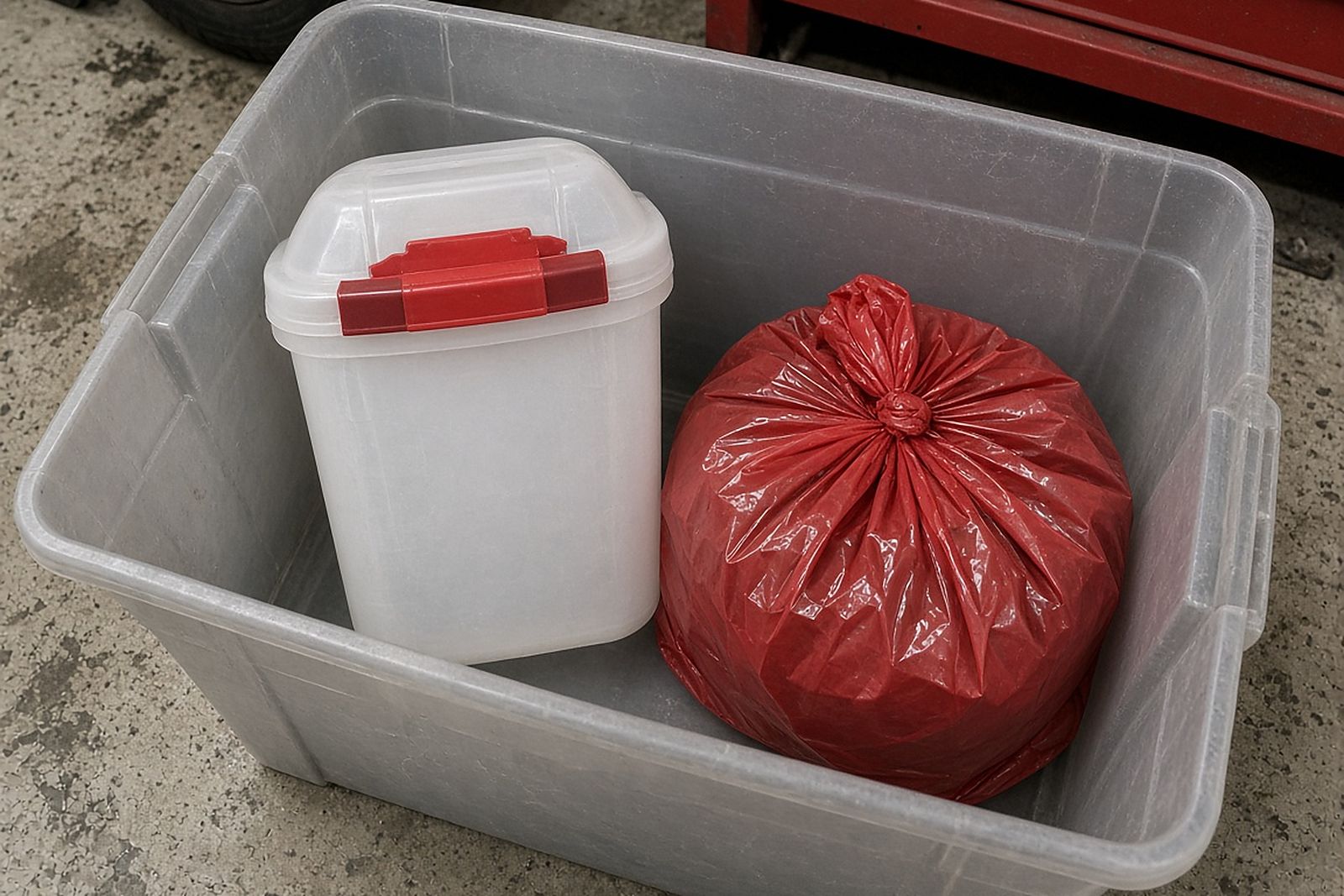
Waste & Disposal Classifier
Five questions about the material point to the likely waste category and which authority to confirm the rules with.
Open tool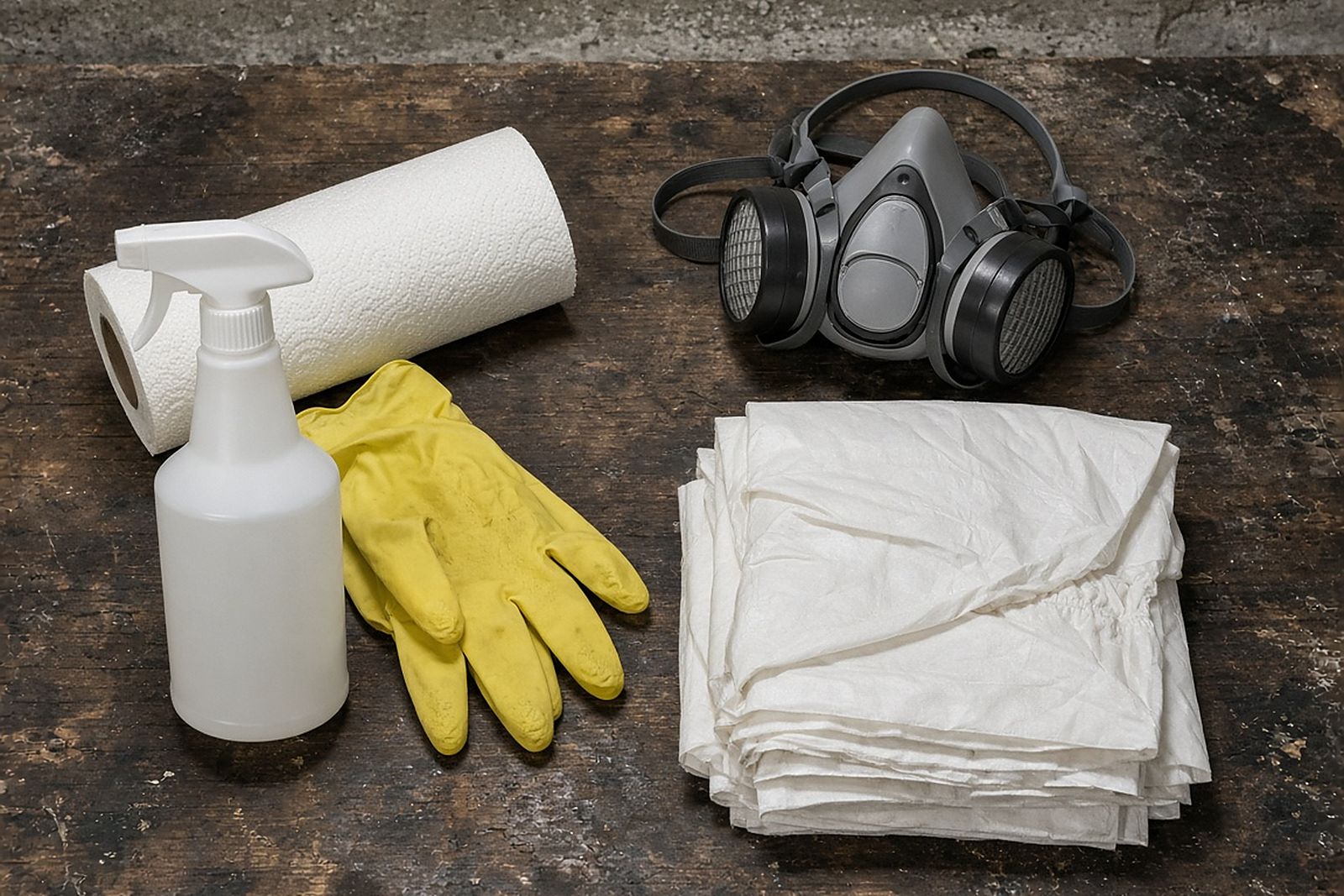
DIY or Call a Pro? Risk Check
Eight yes-or-no questions that produce a risk level and explain when professional help is the safer choice.
Open toolKnowledge quiz
A knowledge check with explanations and a study guide covering hazards, containment, disinfection, waste and documentation.
Take the quizHow these tools fit tear gas residue cleanup
Each tool ends with something you can use. It might be an ordered list, a summary you can print, a set of open questions, or a category to confirm with an official. Those results are starting points for calls and emails, not final answers. A cost range helps you read a quote, but it is not a bid. A waste category is a question for your state environmental agency, not a ruling. A readiness score shows what you have confirmed about a provider's chemical methods, breathing protection program, and air system plan. It is only as good as the answers you recorded. Keep whatever each tool gives you with your photos and messages. A neat file is often what separates a settled situation from a dragging dispute.
The tools cannot smell your building or look inside your ducts. They cannot know which gas was used if no one told you. They do not replace an on-site check by a checked provider. They do not replace a coverage decision by your insurer or a ruling by the agency that ran the operation. Use them to sort out what you know and to bring up what you have not asked. Use them to avoid the mistakes that keep irritation coming back. Those include running the air system, vacuuming without a HEPA filter, wet-mopping powder, and accepting a scope that ignores soft items. When a result surprises you, treat it as a reason to make one more call. Do not treat it as a reason to dismiss the professional in front of you.

Tear Gas Residue Cleanup numbers worth knowing before you plan
Tear gas is made to be felt at very low levels. That is exactly why it is so hard to live with after the event is over. The figures here help put the problem in view. They show how long this residue can stay active in fabric and air ducts. They show what tends to drive the cost of chemical cleanup compared with normal cleaning. They also show how these chemicals affect the eyes, skin, and airways. That helps you make sense of symptoms that keep coming back. It also explains quotes that seem high for what looks like dust. Read each figure as background for a talk with a checked provider, your landlord, or your insurer. Do not read it as a prediction about your own building.
- 15 min (pH 7) vs 1 min (pH 9)
CS hydrolyzes with a half-life of about 15 minutes at pH 7 but about 1 minute at pH 9, so alkaline solutions break it down far faster.
Read with care: Half-life in solution does not equal persistence of dry residue on carpet, drywall or HVAC surfaces, where CS is sparingly soluble.
Source: National Research Council (2014)Laboratory chemistry of CS in solution
- 10 working days
Employers must offer the hepatitis B vaccine within 10 working days of assigning an employee to a job with occupational blood exposure.
Read with care: Employees may decline; the vaccine must be at no cost.
Source: OSHA (2024)United States employers with occupationally exposed employees
- 180 days
Facilities generating more than 100 kg but less than 1,000 kg of hazardous waste per month are Small Quantity Generators and may store it up to 180 days.
Read with care: Limit extends to 270 days when the disposal facility is over 200 miles away.
Source: EPA (2024)United States, RCRA generators
- 29
OSHA approves 29 State Plans, 22 covering private and public workers and 7 covering only state and local government employees.
Read with care: State plans must be at least as effective as federal OSHA but may differ in detail.
Source: OSHA (2024)United States states and territories
These figures are public research and agency data, not this network's own job records. Keep each number with its population, year and limits; none of them predicts cost, timing or outcome at a specific property.
What other visitors decided
Every count is a real visitor vote; nothing is seeded or padded. One vote per poll per device, and you can change your answer.
How did tear gas end up in your building?
What was the first thing you tried to reduce the irritation?
Questions about the tear gas residue cleanup tools
Which tool should I use first after a deployment?
If the event was recent, start with the First 24 Hours Planner. It puts the first steps in order and tells you what not to do, starting with the heating and cooling system. If you are past that stage and are deciding whether to clean up yourself, the DIY risk check is next. Once you are ready to talk with providers, landlords, and insurers, use the estimator, vetting checklist, and claim organizer.
Do the tools distinguish between CS and OC?
Where it changes the guidance, yes. The risk check and planner ask whether you know which agent was used, and the estimator treats soft-goods and HVAC involvement as major drivers for both. If you do not know the agent, the tools default to the more cautious path. The responding agency or the incident report may identify the agent, and that information is worth asking for.
Is my information saved or shared?
The tools keep your choices in your browser, so you can come back to a checklist or planner you started. Nothing is sent to providers, insurers, or site staff. Clearing your browsing data erases your progress. So use the print or copy options each tool offers if you want a lasting copy for your records or for a talk with your landlord.
Can the estimator predict what a provider will charge?
No. It shows a sample range based on the affected area, the amount of soft items, whether the air system was involved, and the extras you pick. That way a written quote makes more sense when it arrives. Real pricing depends on a site visit, local labor rates, and disposal fees. It also depends on findings a form cannot capture, such as residue in the ducts. Use it to ask better questions, not to bargain.
What if the waste classifier suggests ordinary solid waste for my carpet?
In many places, that is a likely result for soiled debris that is bagged and sealed. But it is not a final ruling. Rules vary by state and county. Large business loads or other chemicals can change the answer. Check with the local office or your provider's waste company before anything goes to the curb. Make sure removal happens inside the sealed work area, so residue is not stirred back into the air on the way out.
Do the tools apply to a shared-wall or multi-unit building?
Yes. But shared hallways and central air systems create paths the tools can only remind you about. The planner will tell you to let building management know and to ask about shared return vents. The vetting checklist includes questions about the order of work across units. Who has authority, and how costs are split among units, depends on building documents and leases. The tools cannot interpret those for you.
Are these tools a replacement for calling a provider?
They help you get ready for that call. A checked provider brings HEPA equipment, the right chemicals, breathing protection, an air system check, and judgment about what can be saved. A web page cannot supply any of that. The tools make you a better client. They show what to ask, what to photograph, and what a thorough scope includes. When a result points toward professional help, that is the moment to reach out.
More on tear gas residue cleanup
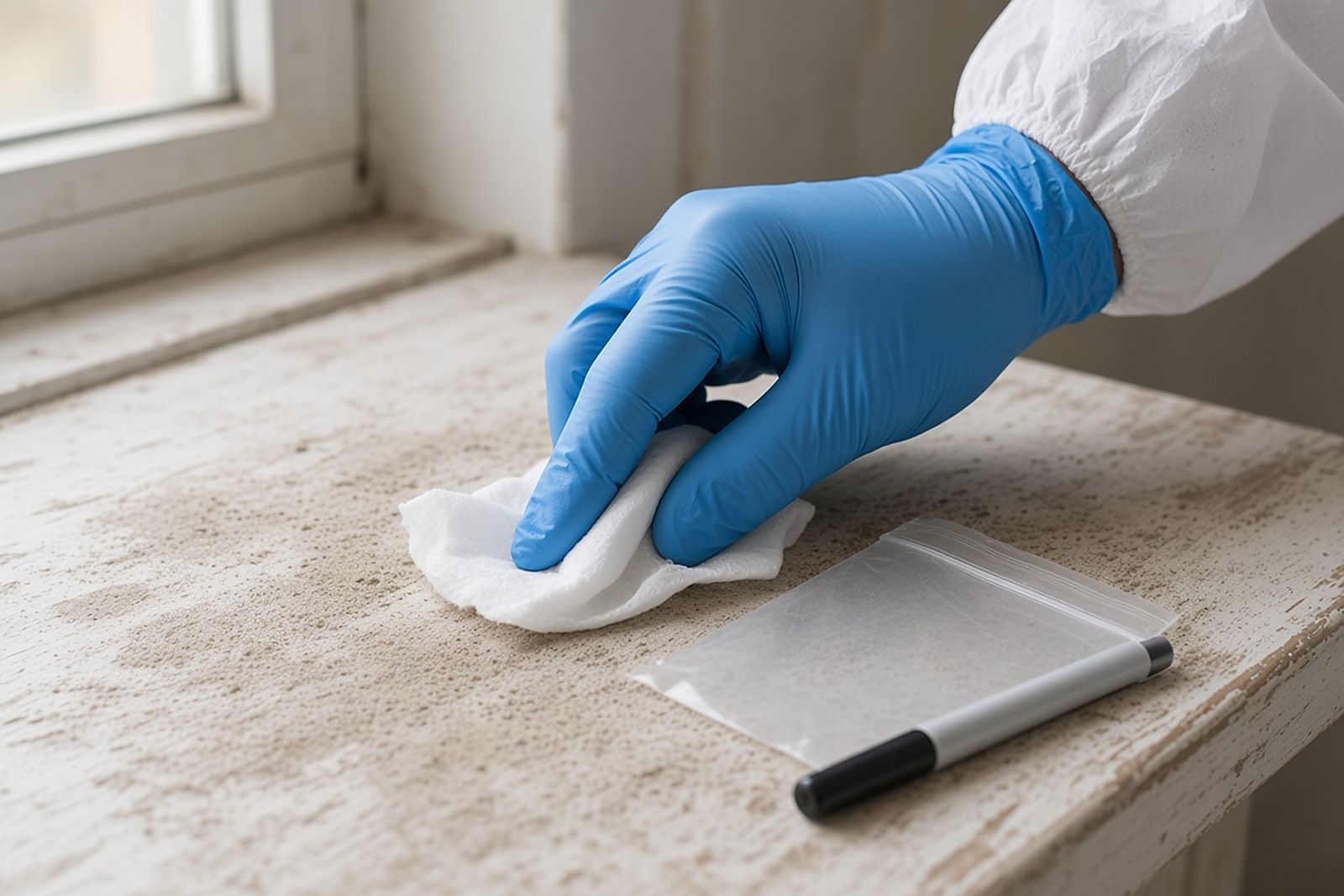
Tear Gas Residue Cleanup services
Learn what professional tear gas cleanup involves. It covers HEPA removal, the right chemicals, air system checks, choices about soft items, and safe return checks.
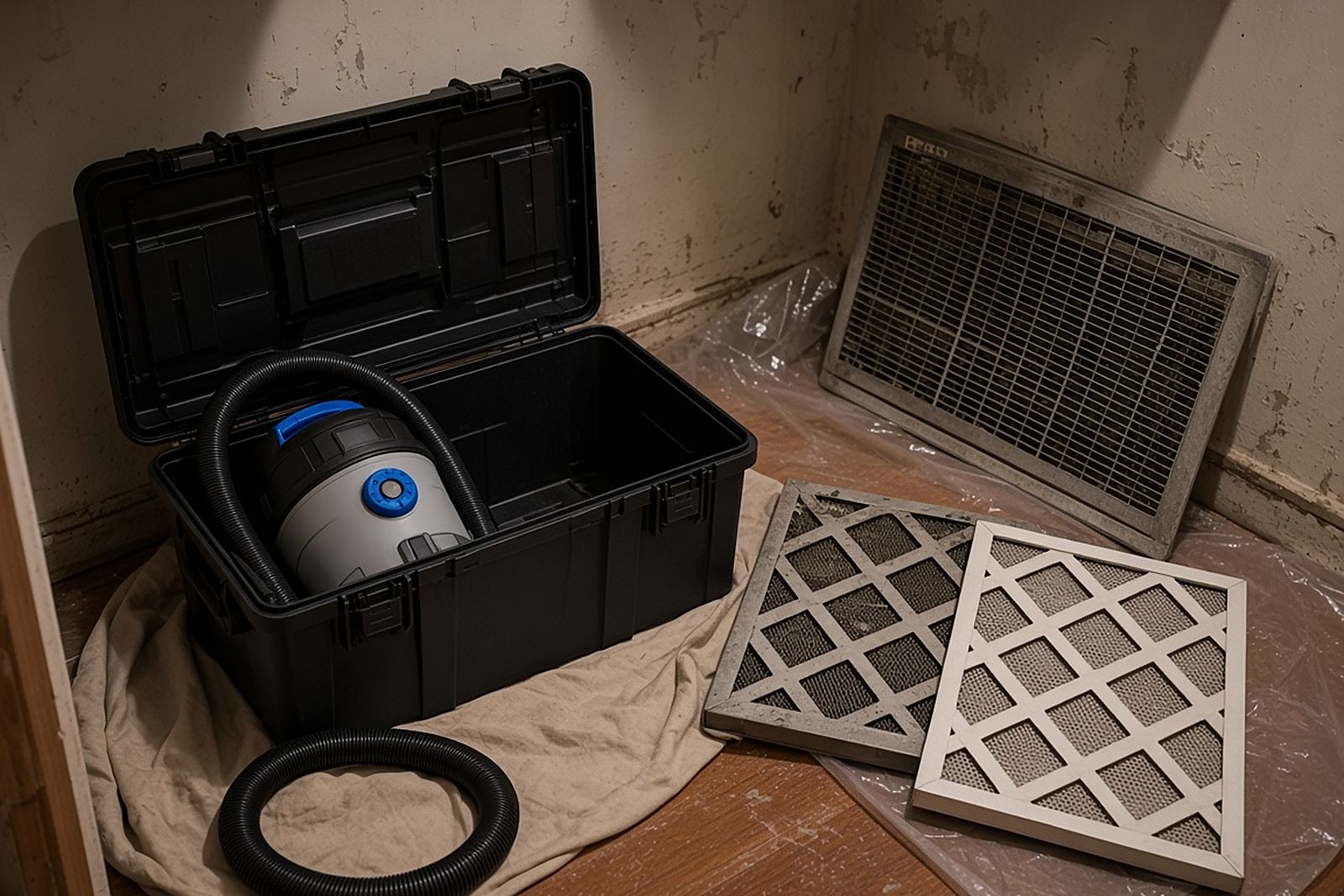
Costs explained
What drives the price, published cost ranges, and how to read a written quote line by line.
Insurance and payment
Which policies may respond, how to document a claim, and what to do if coverage is denied.
Community polls
Compare your experience with other tenants, owners, and managers who dealt with tear gas residue. See which choices they found hardest afterward.
Knowledge quiz
Check what you know about how CS and OC residue behaves, why the air system matters, and what a thorough cleanup and its records should include.
Articles and resources
Read articles on how tear gas acts in buildings, lessons from home and business cleanups, and how cleanup methods keep changing.
Field guides
Read detailed guides on where residue hides, breaking it down versus cleaning it, who does what as landlord or tenant, and what a written cleanup plan should say.