Short answer
A professional tear gas residue cleanup usually starts by confirming the home is safe to enter and which agent was used, then sets up containment, HEPA vacuums settled particles before any wet cleaning, washes hard surfaces with compatible chemistry, sorts soft goods into clean or discard, inspects and cleans the HVAC pathway, and ends with a walkthrough where occupants check for renewed irritation before moving back in.
Before the crew starts cleaning
The first step is making sure the home can be entered at all. After a police deployment, there may be broken glass, forced doors, damaged ceilings or canisters still inside. If the scene has not been released by the agency, the crew waits.
Next, the lead technician gathers information. Which agent was used, and how many canisters entered the building? Which rooms did they land in? Was the heating or cooling system running during or after the event? Has anyone been inside since, and did they notice burning eyes or coughing in particular rooms?
You may not know all the answers, and that is fine. The technician will note what is unknown and plan for it. If you can get an incident or report number from the responding agency, share it, since it may help identify the agent later.
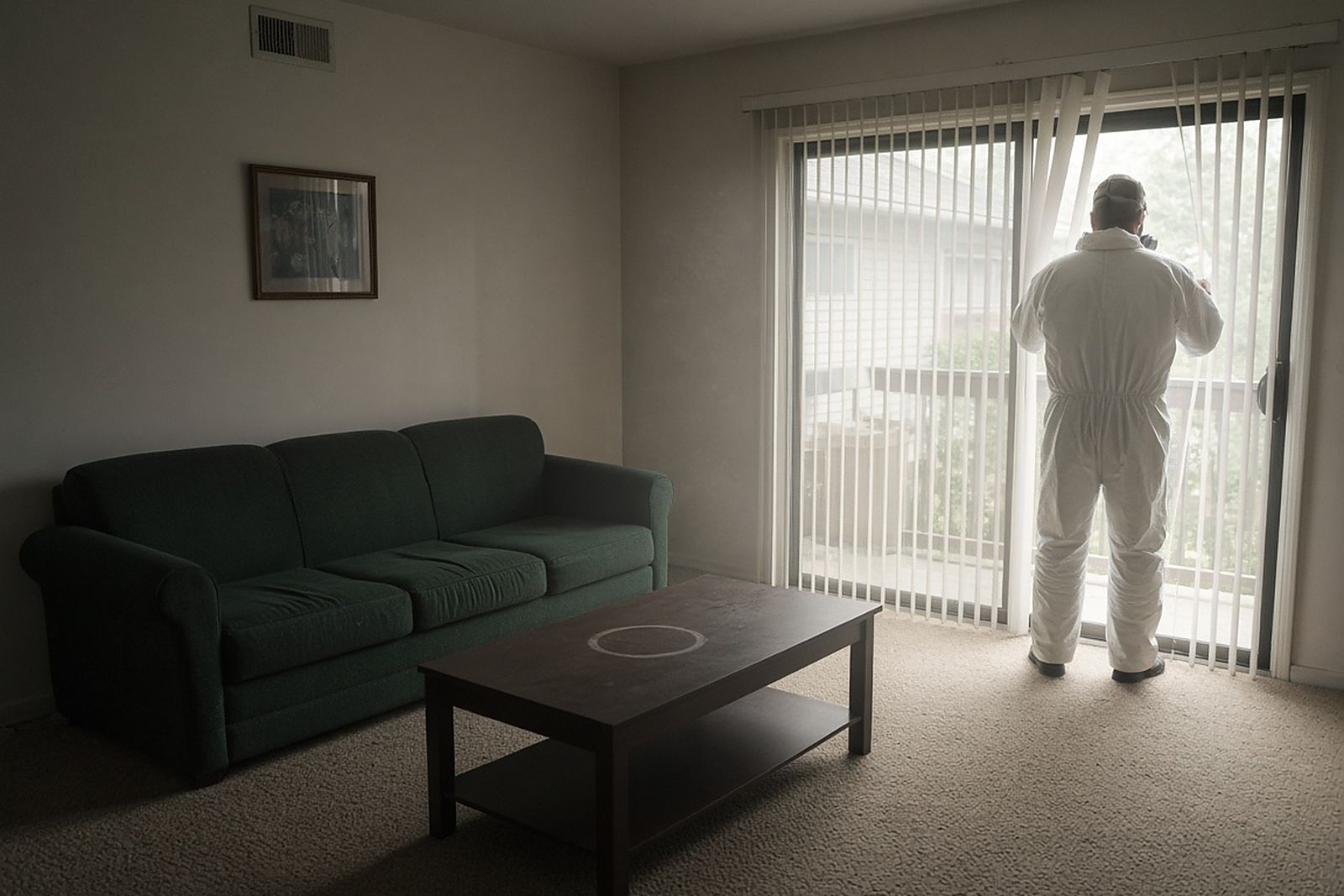
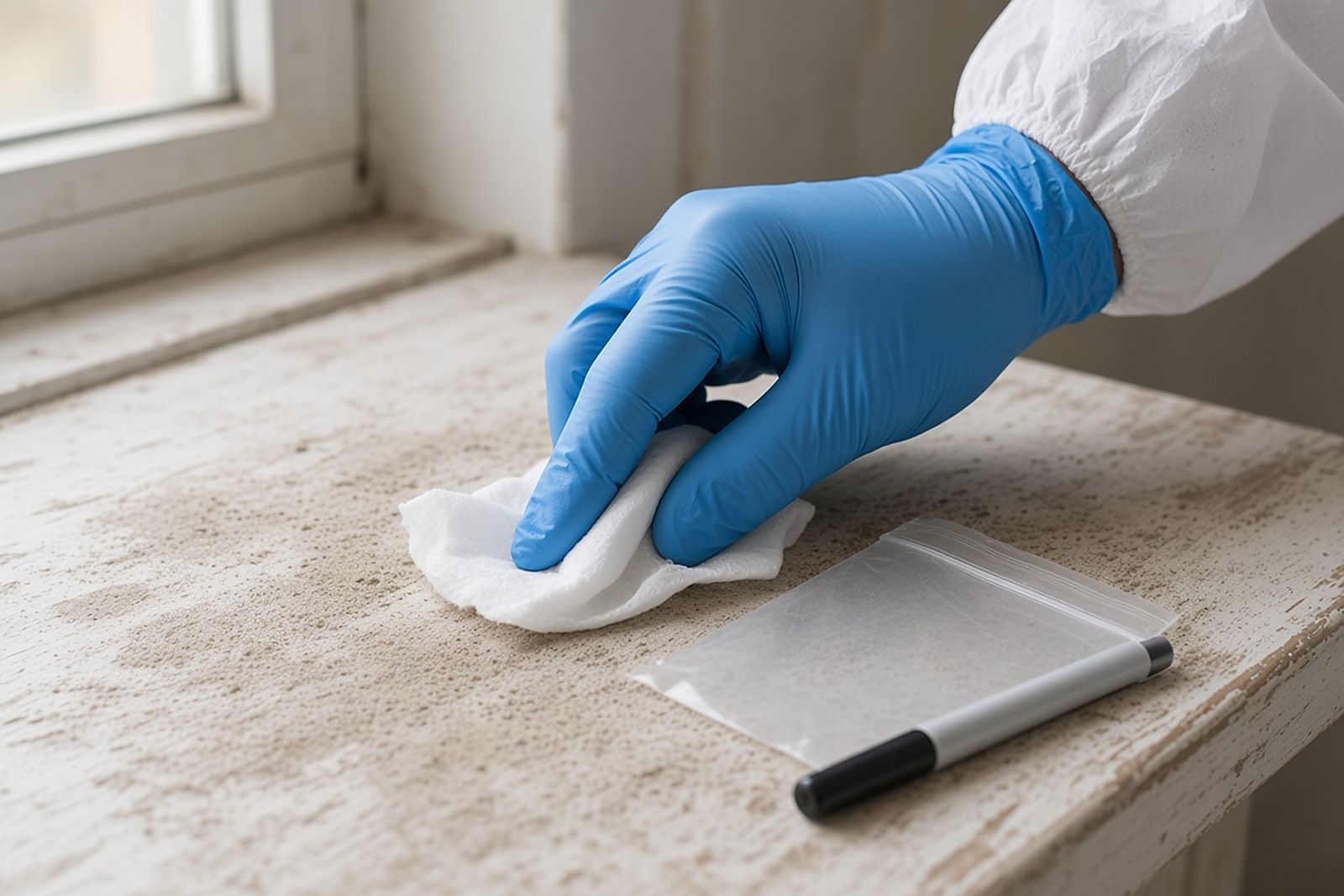
The walkthrough itself is done with protective equipment. The technician looks for powder on sills, counters and floors, oily films on surfaces, residue on fabrics and signs that the air handler moved contamination. They photograph conditions before anything is disturbed.
Why does the crew wear respirators for what looks like dust?
Tear gas agents are designed to cause irritation at very low concentrations. Residue that looks like a light dusting can release enough irritant into the air when disturbed to affect anyone without protection.
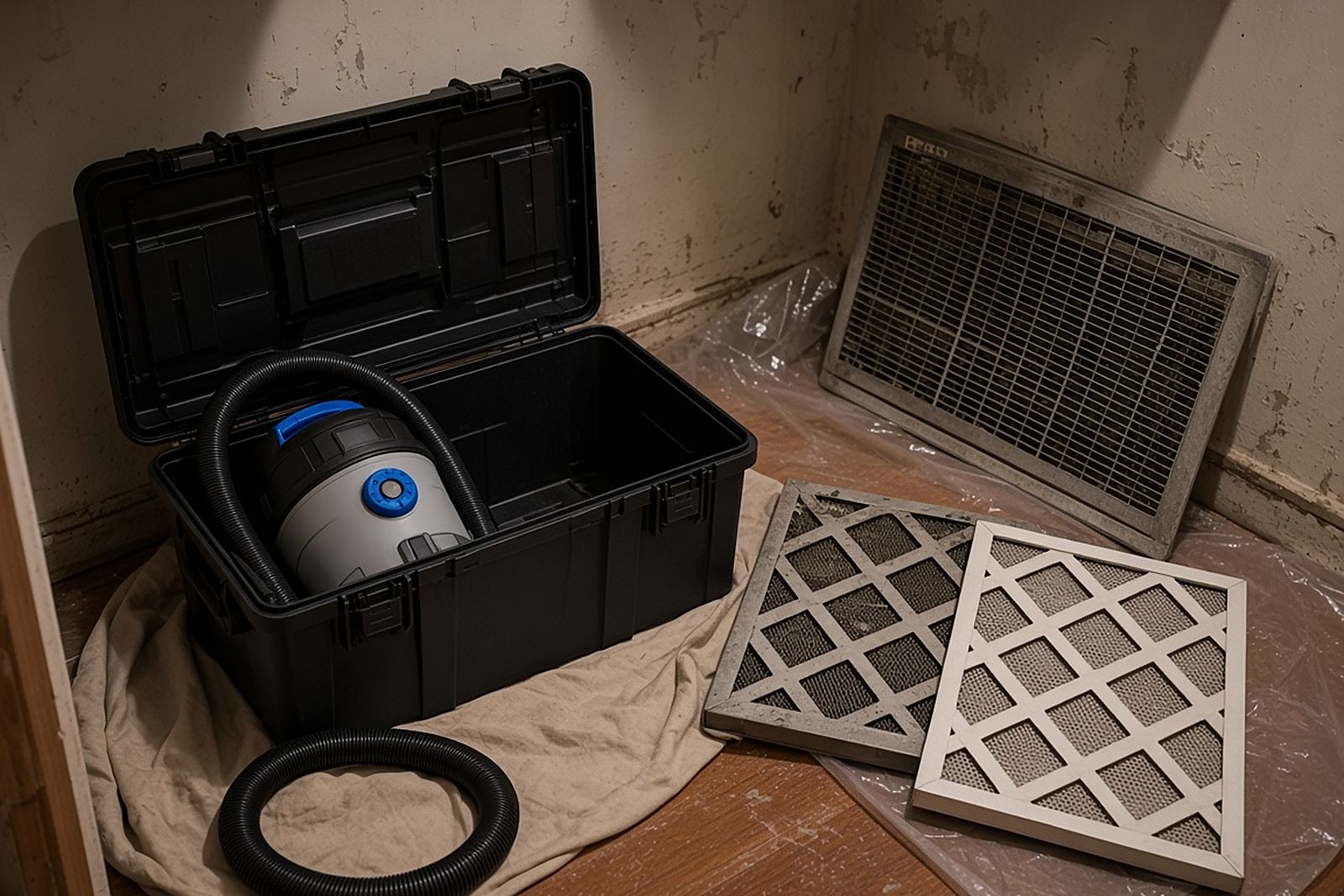
That is why crews wear respirators, eye protection, gloves and disposable coveralls, and why they may set up plastic barriers to keep residue from spreading to cleaner parts of the home. Some crews also use air scrubbers with HEPA filtration to capture particles stirred up during the work.
Expect the crew to ask you and your family to stay away during active cleaning. Even brief visits can lead to coughing, eye irritation and skin discomfort.
If you need to retrieve medications, documents or a pet's supplies, tell the crew ahead of time. They can often bring items out to you, bagged, so you do not have to walk through rooms that are still being cleaned.
The cleaning sequence, step by step
Professional tear gas residue cleanup follows a deliberate order so that residue is removed, not pushed around. While each provider has its own methods, the sequence often looks like this.
- Remove canisters, debris and broken materials, bagging them to prevent further spread.
- Turn off and seal the HVAC system, then replace or bag the filter.
- HEPA vacuum ceilings, walls, window treatments, furniture and floors to lift settled particles without re-aerosolizing them.
- Wash hard surfaces with cleaning chemistry chosen for the agent and compatible with each surface, often in more than one pass.
- Clean inside cabinets, drawers and closets that were open or unsealed during the event.
- Inspect and clean returns, registers and accessible ducts, or bring in a duct cleaning specialist.
- Package discarded soft goods and cleaning waste for disposal.
Deciding what to save and what to throw away
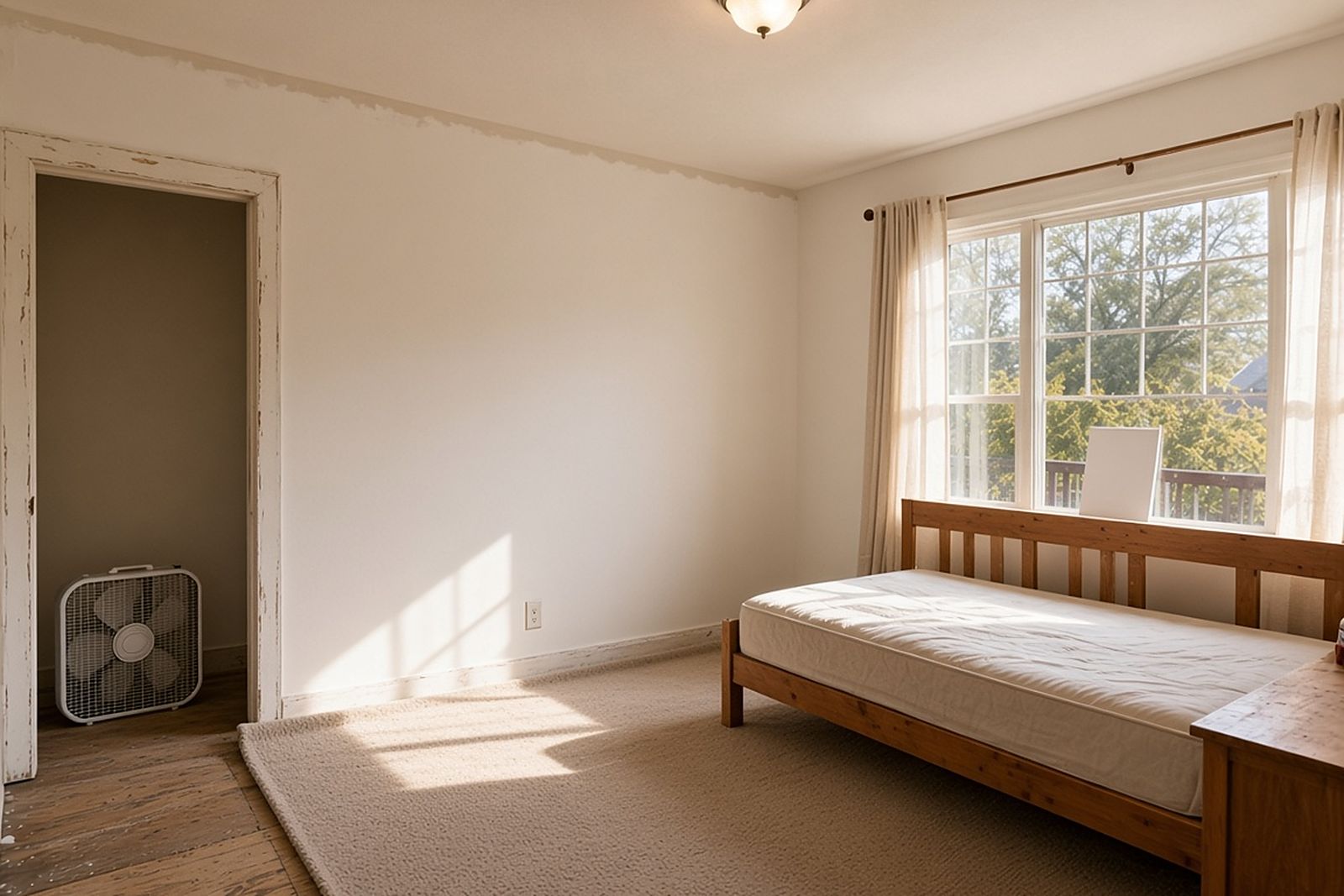
Soft goods are often the hardest part of the job. Mattresses, pillows, upholstered furniture, rugs, curtains and stuffed toys can absorb residue deep into their fibers. Some items clean well; others continue to release irritants no matter how many times they are treated.
A good provider will explain their recommendation for each category and let you decide on items with sentimental or financial value. They may suggest professional laundering for clothing and bedding, specialty cleaning for certain fabrics, and disposal for items that are heavily contaminated or inexpensive to replace.
OC residue in particular can be stubborn in fabrics because of its oily nature. CS powder may vacuum out of hard-wearing textiles more easily but lodge in deeper padding.
Take your own photographs of anything that will be discarded, and ask the provider for a written list. You may need both for an insurance claim or a claim against the responding agency.
Why the HVAC system gets so much attention
If air moved through the system during or after the deployment, residue likely settled in the return ducts, on the filter, in the blower compartment and possibly in supply ducts. Each time the system runs afterward, it can push residue back into rooms that were already cleaned.
Crews usually inspect the parts they can reach, replace the filter and clean registers and returns. Depending on what they find, they may recommend deeper duct cleaning or replacement of components that cannot be cleaned effectively.
Ask the provider to show you photographs of what they found inside the system. That evidence helps you understand the recommendation and supports any insurance review.
In multi-unit buildings, the HVAC question can extend beyond your own unit. Shared returns, corridor ventilation and transfer grilles can carry residue between spaces. If you rent, the landlord or building manager usually controls those systems, so the provider may need to coordinate with them before your unit can be considered finished.
Until the system has been inspected, keep it off if you can do so safely. In extreme heat or cold, ask the provider for advice on temporary heating or cooling that does not draw air through contaminated ducts.
Hallway deployments in apartment buildings
When police deploy gas in a shared hallway, neighboring units can be affected even though no one fired anything into them. Residue slips in under doors and through transfer grilles, and tenants often discover it only when their eyes water in the room nearest the entry.
In that situation the building manager usually hires the provider for both the common hallway and the affected units. Expect powder along baseboards near the door, on upholstery and counters, and a heavily loaded filter in the unit's air handler.
The order of work matters. Crews typically clean the hallway first and then each unit, working from the entry inward, so they are not dragging residue from the corridor into rooms they have just finished. Upholstery may need more than one pass, some pillows and rugs are better replaced, curtains can go out for laundering, and the filter, return and accessible duct are handled before the air handler runs again.
How do you know it is safe to move back in?
There is no single household test that proves every trace of residue is gone. Providers generally rely on a combination of visual inspection, thorough cleaning of all known reservoirs and an occupant walkthrough.
During the walkthrough, spend time in each room, sit on furniture, open closets and let the heating or cooling system run. Renewed eye or throat irritation is a sign that a reservoir remains. Tell the provider immediately, and ask how they handle follow-up visits.
Health effects can linger, too. A 2014 study of 6,723 US Army recruits in Military Medicine found the risk of acute respiratory illness was 2.44 times higher after mandatory CS exposure than in the training period before it. If anyone in your household has ongoing breathing problems, talk with a doctor, and mention the exposure.
Records to keep, and easing the strain on your household
Ask for a closeout package that includes before and after photographs, a list of rooms and surfaces cleaned, the products used, the soft goods cleaned or discarded, HVAC findings and actions, and any recommendations for follow-up.
If you rent, share the package with your landlord. If you are pursuing reimbursement from an insurer or a government agency, keep it with your receipts and correspondence. Ask the agency's claims office directly what deadline applies to a claim against it.
Add your own notes to the package: the dates you were out of the home, the costs you paid for temporary lodging and any symptoms your household experienced after returning. A dated personal log fills gaps that the provider's records cannot.
Arrange a place to stay for the duration of the work, and pack only essentials that were stored in closed containers away from the affected rooms. Keep bags of possibly contaminated clothing sealed and separate until the provider advises on laundering.
Give yourself time to recover emotionally as well. A police action at or near your home can be deeply unsettling, even if you were not involved. Talking with someone you trust, or with a counselor, is a reasonable part of getting back to normal.