Short answer
Judge tear gas cleanup technology by whether it captures or chemically breaks down the agent, reaches the reservoirs where residue hides and is safe for the people and materials involved. HEPA vacuums, air scrubbers and duct cleaning equipment directly address the problem. Ozone, hydroxyl generators and deodorizing fogs mainly target odor and cannot replace physical removal of CS or OC residue.
What makes a tool useful against tear gas residue
Tear gas residue is a physical deposit. CS and CN settle as fine solid particles, and OC leaves an oily film. To solve the problem, a tool has to do one of two things: physically remove that deposit from the building or chemically break it down so it no longer irritates.
Anything that only masks odor, freshens air or treats microorganisms is addressing a different problem. That does not make it useless, but it means it cannot be the core of the plan. When a provider shows you equipment, keep asking which of those two jobs it does.
It also has to reach the right places. Residue concentrates in carpet, upholstery, bedding, curtains, ceiling tiles and ductwork. A tool that cleans hard surfaces beautifully but never touches those reservoirs will leave the building irritating.
HEPA vacuums and air scrubbers: the backbone
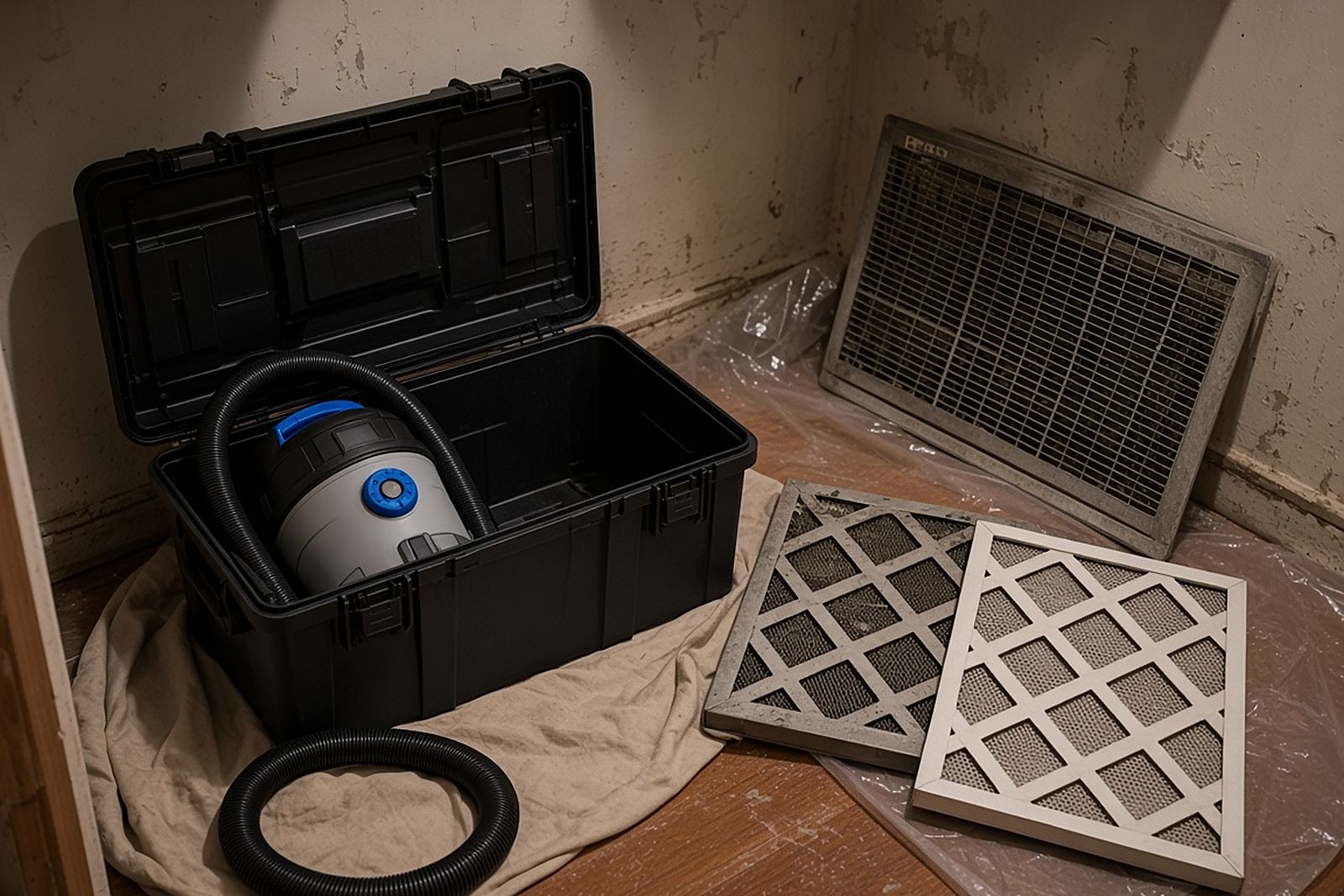
High-efficiency particulate air filtration captures very fine particles instead of blowing them back into the room. A standard household vacuum can exhaust fine CS particles right back into the air, making symptoms worse during cleaning. A HEPA vacuum with sealed construction keeps them in the bag or canister.
Portable HEPA air scrubbers draw room air through filters continuously during work, capturing particles that are knocked loose as crews clean. Used with sealed doorways, they help keep residue from migrating into rooms that have already been cleaned or were never affected.
These tools are not new or flashy, but they directly remove the agent. When a proposal describes top-down HEPA vacuuming of ceilings, walls, fixtures and floors before wet cleaning, it is describing the part of the job that does the most good.
Extraction for carpet and upholstery
Soft goods need their own equipment. Hot water extraction machines used on carpet and upholstery can flush out some residue, especially when paired with a suitable cleaning solution and followed by HEPA vacuuming once dry. Extraction is not a guarantee, particularly for pad and foam, but it gives lightly exposed carpet and furniture a real chance of being saved. Ask how the provider will judge whether extraction worked before deciding to remove an item.
Do ozone or hydroxyl generators remove tear gas?
Ozone generators and hydroxyl radical generators are often marketed for odor removal after fires, smoke or decomposition. Some providers offer them after tear gas deployments because the building can smell smoky or chemical.
Neither device is designed to physically remove CS particles from carpet fibers or OC film from a countertop. They may reduce some odors, but the irritating agent can remain. Ozone itself is a respiratory irritant, so rooms treated with ozone must be unoccupied, including by pets and plants, and adequately ventilated before anyone returns. Some materials, such as certain rubbers and fabrics, can be damaged by ozone exposure.
If a provider proposes one of these devices, ask what specific problem it will address, when in the sequence it will run and what will be done to remove the residue itself. A plan that relies on an ozone treatment instead of HEPA vacuuming and cleaning is unlikely to resolve symptoms.
Odor and irritation are not the same signal. A room can smell neutral after an ozone run and still make your eyes water when you sit on the couch, because the particles in the cushion were never removed. Judge the result by how the space feels in use, not by how it smells when you first open the door.
Foggers and electrostatic sprayers
Foggers and electrostatic sprayers are designed to spread a liquid over many surfaces quickly. In disinfection work, that can be useful. For tear gas residue, their value is limited.
Spraying a cleaning solution onto particles does not remove them; it may dissolve some of the agent in place, but without wiping or extraction the residue and solution often dry back onto the surface. Fogging can also moisten soft goods and ceiling tiles without cleaning them, which may make things worse. Deodorizing fogs mainly cover odor.
There may be narrow uses, such as applying a compatible solution to complex surfaces that will then be wiped. Ask the provider to explain exactly what the fog or spray accomplishes and what follows it.
Duct cleaning equipment and inspection cameras
HVAC systems are one of the most common reasons symptoms keep returning after a tear gas cleanup. Residue pulled into returns can coat duct interiors, the blower and coils, then be redistributed every time the system runs.
Duct cleaning systems that combine negative air collection with rotating brushes or air whips can dislodge and capture residue from accessible duct runs. Inspection cameras let the crew see inside ducts before and after cleaning, which helps decide where work is needed and provides visual documentation.
These tools are among the most useful technologies for tear gas work, but only in capable hands. Ask whether the crew will inspect ducts before and after cleaning, whether they can share images, how they will protect already cleaned rooms during duct work and which sections are inaccessible and why.
Filters deserve a note. Replacing the system filter is inexpensive and important, but the used filter is loaded with residue. It should be bagged carefully at the unit rather than carried uncovered through the house. Some providers also recommend a higher-efficiency filter for a period after cleaning, as long as the system can handle it; ask your HVAC technician before upgrading.
Evaluating cleaning chemistry
Chemistry is technology too, and it often matters more than equipment. For CS, alkaline conditions speed breakdown dramatically.
For OC, the priority is lifting an oily film, which calls for a detergent or degreaser suited to the surface rather than a simple water rinse. A single all-purpose product rarely handles both agents well.
New cleaning products can bring real improvements, such as lower odor or better compatibility with sensitive finishes. Evaluate them by asking what agent they target, what surfaces they are safe on, what protective equipment they require and whether the provider has tested them on a hidden spot before broad use.
Can technology confirm the building is safe to reoccupy?
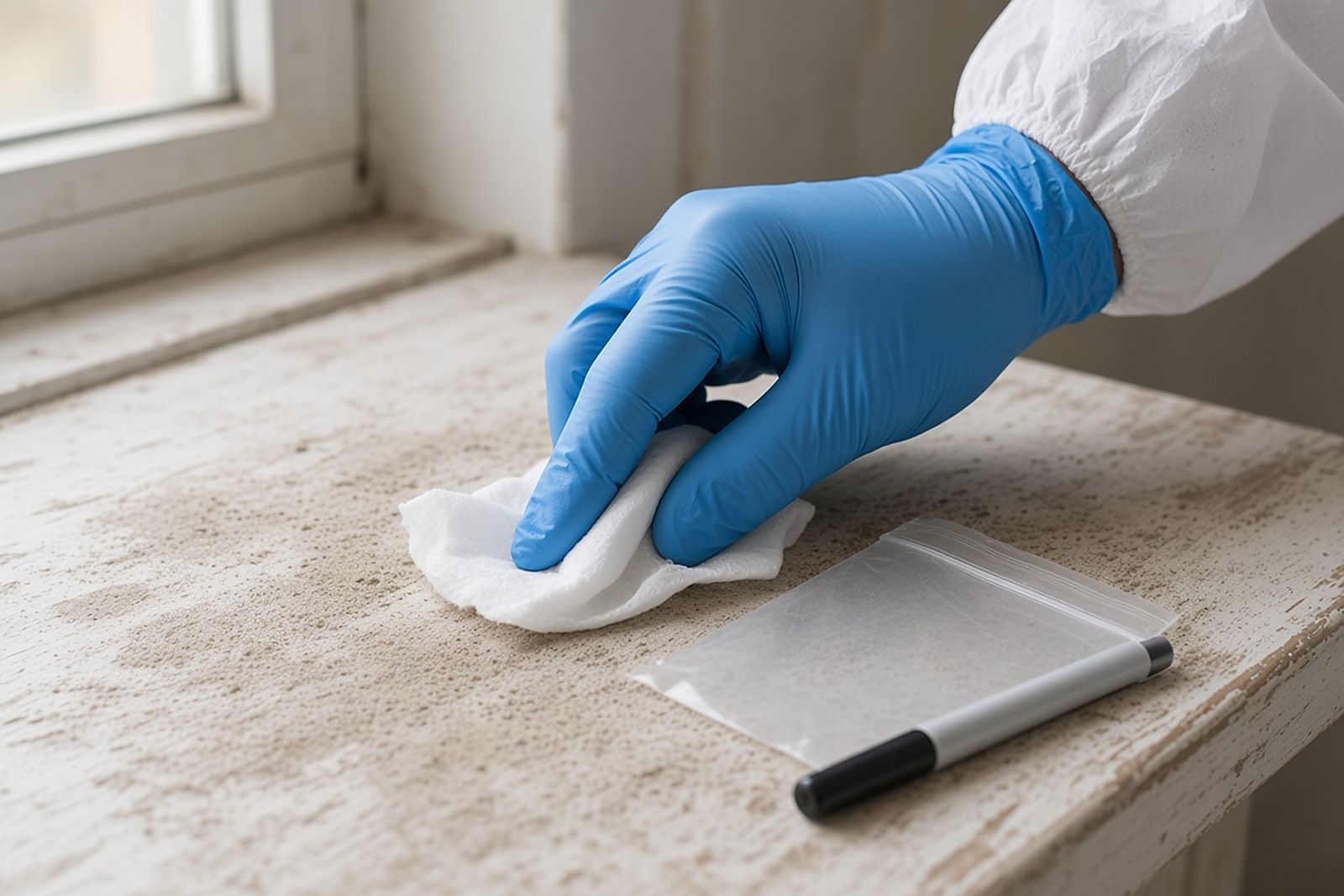
Some providers offer instruments or sampling to support clearance. Handheld air monitors for general chemicals may not detect CS at the concentrations that still irritate people. Laboratory analysis of surface wipes or air samples for the specific agent is possible but requires a defined method, a lab and a comparison point.
Workplace exposure limits give some context, but they are designed for workers, not families, and they apply to air rather than surfaces. A result below a workplace limit does not automatically mean a bedroom is comfortable to sleep in.
In most residential jobs, the most practical verification remains a documented process followed by a walkthrough with the HVAC running and soft goods handled. If you run a food business or other licensed facility, ask your local health department whether any formal clearance is required before you reopen.
The one question that sorts technology-heavy bids
Bids that lead with equipment can be hard to compare, because every device sounds impressive on paper. A bid built around an extended ozone treatment, a whole-house deodorizing fog and a brief wipe-down of kitchen surfaces can look as sophisticated as one built around sealing the HVAC, top-down HEPA vacuuming, alkaline wet cleaning, an itemized soft goods list, camera inspection of the ducts and an air scrubber running during all work.
Ask each provider the same question: how does this plan remove CS from the carpet and the ducts? A provider who answers that ozone will neutralize it is describing odor control. A provider who walks you through vacuuming, extraction and duct cleaning, and can show camera images from a previous job with identifying details removed, is describing removal of the agent.
The ozone-led plan is not necessarily cheaper, and its technology addresses odor rather than the residue that causes irritation. That single question works on any bid, whatever equipment it lists.
What belongs in the closeout record
Ask for a record that lists each tool used, where it was used and when in the sequence. For duct work, request before and after images. For chemistry, request product names and the surfaces each was used on. For any sampling, request the method, the laboratory and the results with the comparison used.
A clear record helps if symptoms return, if an insurer questions a line item or if you sell the property later. It also rewards providers who use technology honestly, as support for thorough work rather than a substitute for it.
If a device or product failed to help, that belongs in the record too. Knowing that one approach did not work on a particular surface saves time for anyone who revisits the property.